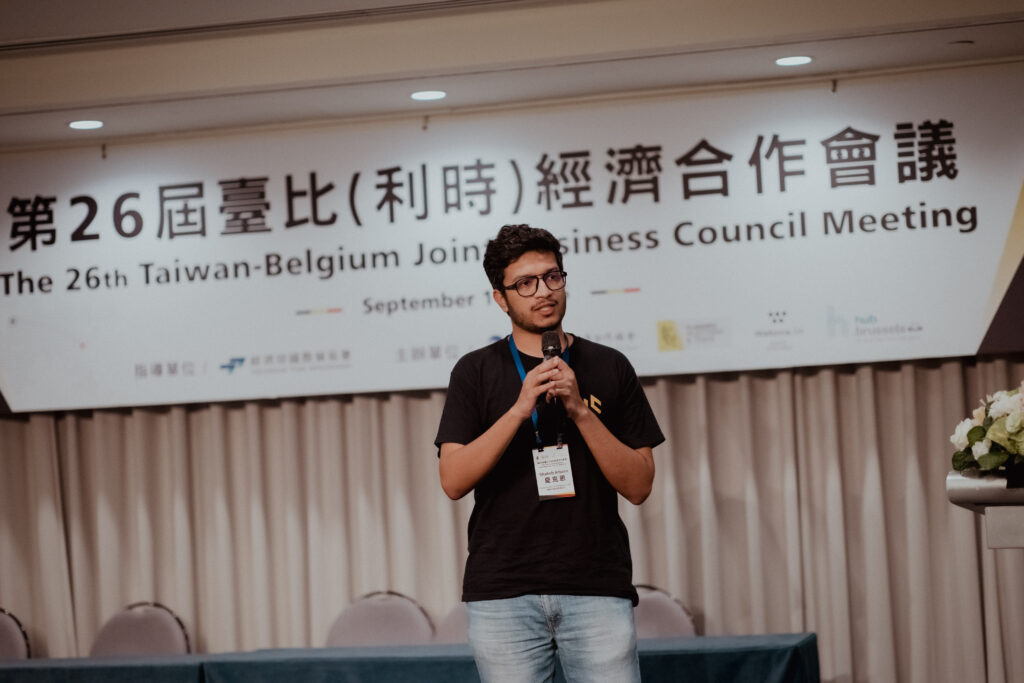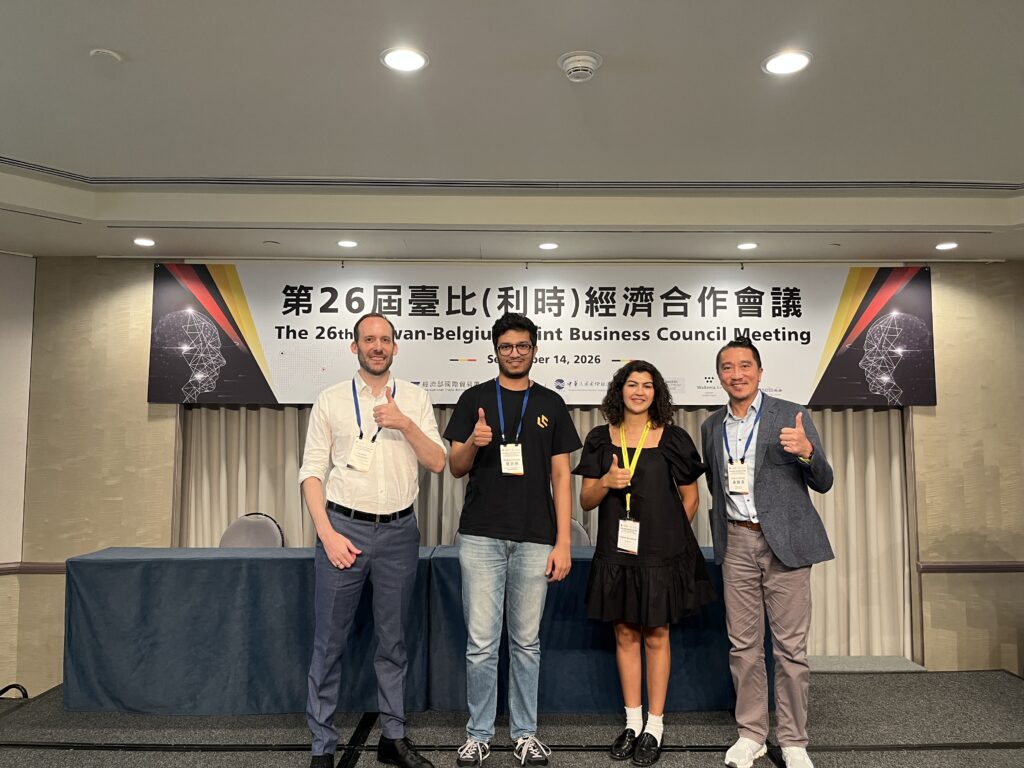
The The 26th Taiwan-Belgium Joint Business Council Meeting
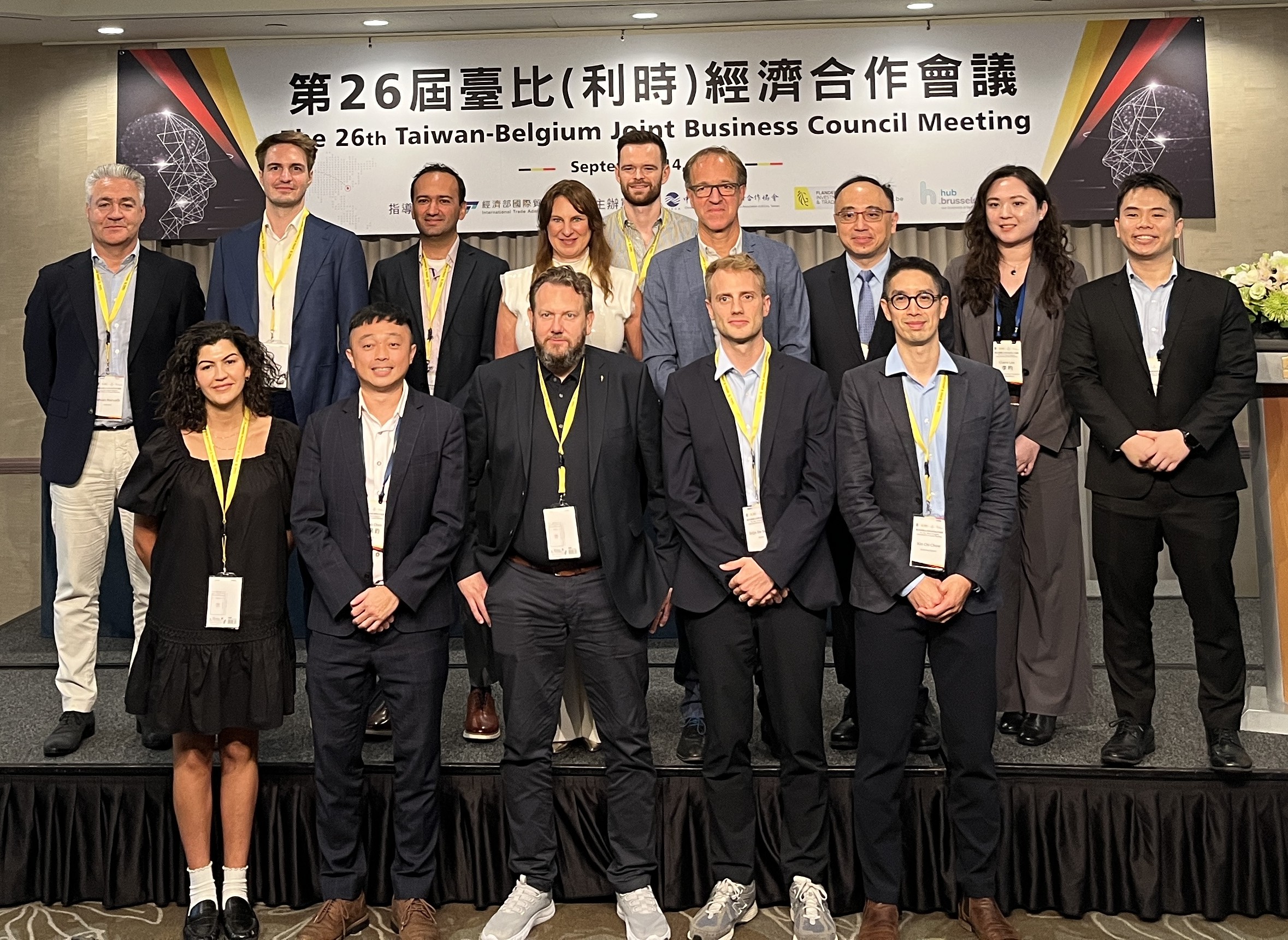
Taking the stage at the 26th Taiwan-Belgium Joint Business Council (JBC) Meeting at the Shangri-La Far Eastern Taipei on September 14, 2026, was a defining milestone for our team. Jointly organized by the Chinese International Economic Cooperation Association (CIECA), the Institute for Information Industry (III), Flanders Investment & Trade (FIT), Wallonia Export and Investment Agency (AWEX), and hub.brussels, the bilateral summit brought together over 120 leaders across government, academia, and high-tech industries to drive AI and semiconductor collaboration.
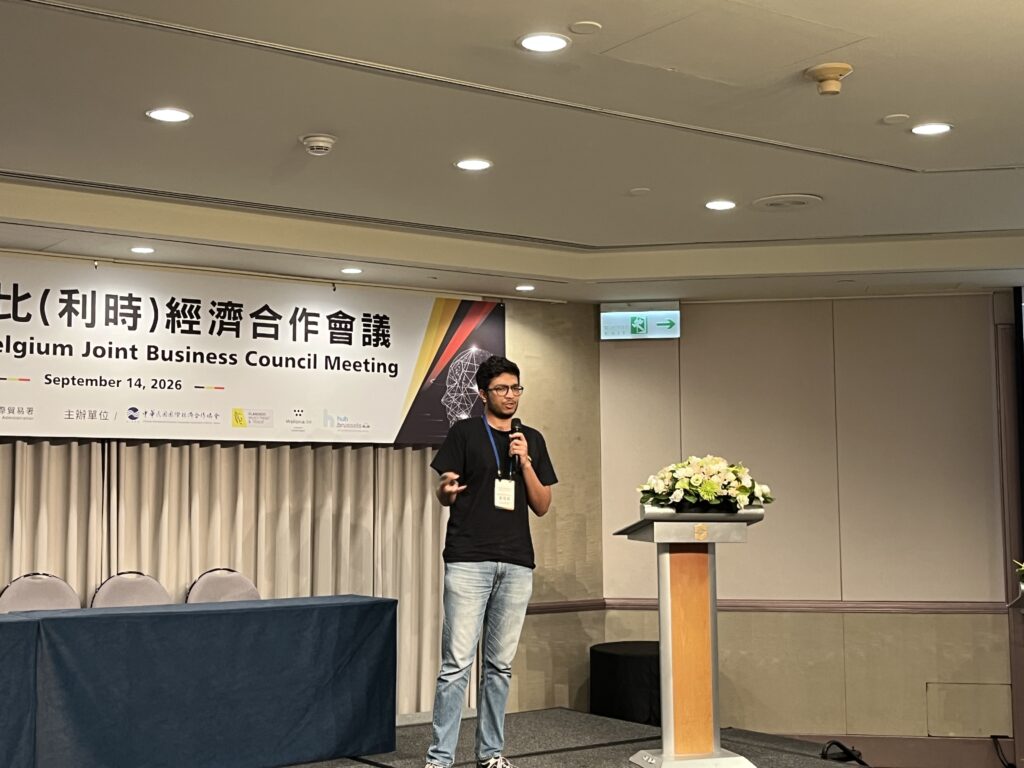
During the conference’s innovation showcase, I represented Locus Sports delivered a technical talk titled:
“Sports tech based real-time athlete health monitoring for avoiding injuries during gameplay” (Chinese Title: 「運動科技應用於運動員即時健康監測與賽事傷害預防」)
As an IoT engineer and entrepreneur, my focus is centered on a core engineering problem in modern athletics: How do we shift sports medicine from post-game reactive care to live, in-game predictive injury prevention?
The Technical Challenge: Reactive Care vs. In-Game Prevention
In elite competition, acute structural trauma—such as ACL tears or severe muscle strains—rarely occurs in a vacuum. They are almost always preceded by subtle physiological changes:
- Micro-fatigue: Progressive muscular exhaustion altering biomechanical symmetry.
- Gait Degeneration: Unconscious compensations in foot strike and load distribution.
- Cardiovascular & Thermal Strain: Spikes in core temperature and heart-rate variability (HRV) degradation.
Traditional sports analytics rely heavily on post-match video evaluation or offline laboratory tests. By the time a data scientist reviews those analytics, the athlete is already in rehab. To protect players during active gameplay, telemetry must be processed in real time at the edge.
Technical Architecture for Live Health Telemetry
To build a non-invasive, high-throughput monitoring system capable of operating inside high-density stadiums, we focus on three core technological pillars:
1. Multi-Sensor Fusion & Wearable Ergonomics
Monitoring active gameplay requires sensors that streaming rich kinematic and physiological data without restricting athletic range of motion:
- High-Frequency IMUs : Capturing 9-axis acceleration, angular velocity, and magnetic force at 100Hz sampling rates to quantify limb acceleration and joint angles.
- Biometric Telemetry: Non-invasive surface electromyography (sEMG) arrays monitoring continuous heart rate, and neuromuscular load.
2. Edge Computing & Low-Latency Wireless Transmission
Streaming data from multiple players simultaneously across crowded radio frequency environments presents a major wireless bottleneck.
- On-Device Edge Filtering: Pre-processing raw sensor streams directly on the wearable device using light embedded signal filters to compress noise before transmission.
- Sub-100ms Wireless Telemetry: Utilizing dedicated sub-GHz or low-power wireless mesh protocols to ensure biometric telemetry reaches the sideline coaching dashboard within milliseconds.
3. Predictive Injury Algorithms
Rather than simply alerting when a threshold is breached, our predictive models analyze ongoing deviations from an athlete’s baseline biomechanics:
- Baseline Biomechanical Profiles: Continuous comparison against an athlete’s personalized kinematics.
- Fatigue-Induced Anomaly Detection: Identifying micro-stutters, asymmetric force generation, and kinetic chain imbalances before structural damage occurs.
Presenting at the 26th Taiwan-Belgium Joint Business Council Meeting
The summit underscored the powerful technological synergies between Taiwan and Belgium. Opening remarks from CIECA Chairman Joseph Lyu, Taiwan-Belgium Committee Chairman Dr. Chi-Yuan Chin, FIT Deputy Director Frederic Deprez, and Director of the Belgian Office Taipei Matthieu Branders set the stage for deep AI and tech integration.
Keynote addresses by Dr. Rik Van de Walle (CEO of IDLab and former Rector of Ghent University) and Chris Hung (Director General of MIC/III) highlighted how Taiwan’s hardware and semiconductor leadership pairs seamlessly with Belgium’s software, AI research, and European market ecosystem.
As part of the Taiwanese Startups to Land in Belgium session alongside BBOX Limited, representing Locus Connect Technologies (致點科技股份有限公司)gave us the opportunity to showcase how Taiwanese startup innovations scale internationally into European healthcare and sports markets.